
Football still turns on the same old question: which side understands the next snap before it happens? Super Bowl LX gave a clean answer on 8 February 2026, when Seattle beat New England 29-13 at Levi’s Stadium behind the league’s No. 1 defense, and the College Football Playoff title game gave another on 19 January, when Indiana finished 16-0 by beating Miami 27-21. Neither game was random. Both were shaped by protection rules, field position, pressure design, and the patience to stay inside the plan once the game narrowed.
Protection Breaks First
Quarterback play still gets the headlines, but the first strategic fight is usually won in front of him. Matthew Stafford won the 2025 AP NFL MVP after leading the league with 4,707 passing yards and 46 touchdowns for a 12-5 Rams team, and that season was not just about arm talent; it was also built on pockets that held long enough for deeper throws to develop.
The same NFL season gave a useful line-level detail in Denver, where left tackle Garett Bolles allowed a 5.9% pressure rate, the best mark among NFL tackles with at least 575 pass-blocking snaps, and did not allow a sack. Protection breaks first. When it does not, the whole call sheet opens.
Pressure Changes the Clock
The best defenses now aim less at the sack total than at the quarterback’s internal timer. Seattle showed that clearly in Super Bowl LX, bringing early defensive back pressures that confused New England’s blocking and helping turn the game into six sacks, two interceptions, and a long afternoon for Drake Maye. One small moment told the story: Devon Witherspoon got home early, then Derick Hall and Byron Murphy II kept collapsing the picture, and New England never found a steady answer.
That is why pressure still matters even when it does not finish the play. It changes the clock in the quarterback’s head.
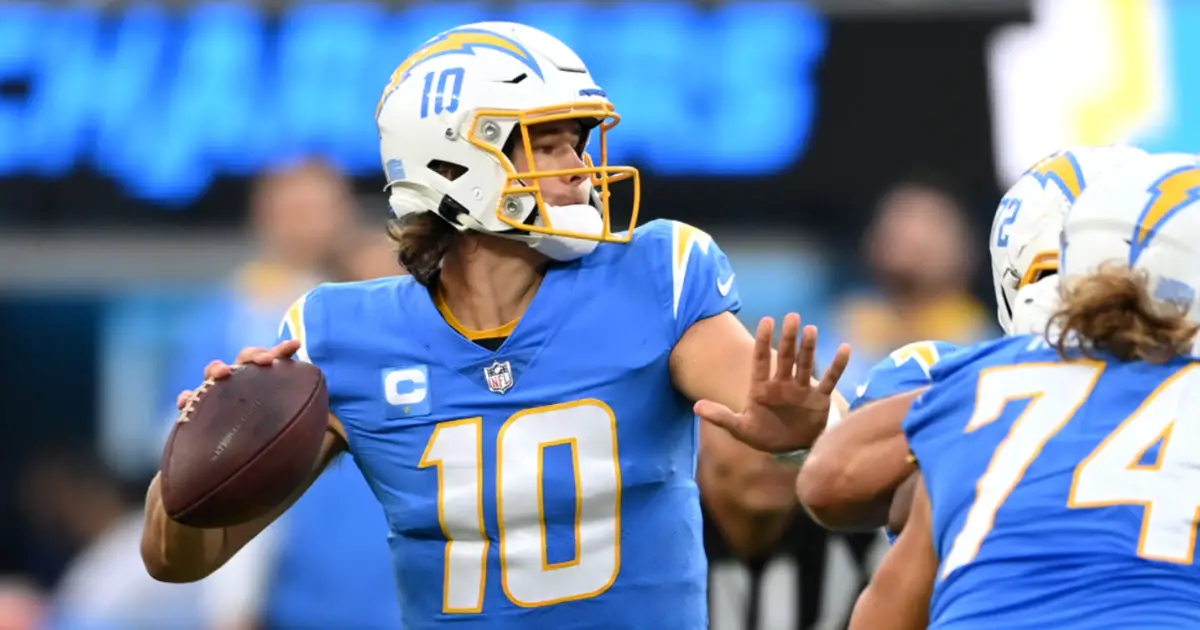
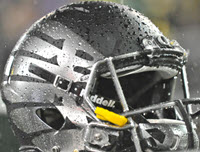
Record setting NFL QB and Ducks alum Justin Herbert in action.
The Live Read is Never Complete
Strategy in football is built under incomplete information. Coaches make fourth-down calls without knowing the next block, coordinators call coverage without knowing whether the route will convert, and quarterbacks throw before the receiver actually clears the hip of the corner. The same uncertainty is why Melbet register here fits naturally inside a game-day routine built around spread, total, player props, and live markets, because the wager only makes sense when the read on protection, tempo, and field position is strong enough to survive the noise of one quarter; Melbet’s own materials also place American football inside its sports lines and describe live and pre-match betting with advanced statistics.
That part is worth stating plainly: betting talk without film detail is just theatre. The useful edge usually starts with the same things coaches care about: who can protect, who can tackle in space, and who can stay ahead of second-and-long.
Hidden Yards Still Decide Titles
The game keeps pretending it belongs to quarterbacks, then special teams barges back into the frame. Indiana’s 27-21 win over Miami in the CFP final included a blocked punt returned by Isaiah Jones for a touchdown in the third quarter, a swing that turned a one-score game into a 17-7 lead, and that sequence mattered just as much as any throw. Miami answered with a 57-yard Mark Fletcher Jr. run and later drove 91 yards for a Malachi Toney touchdown, but Indiana kept forcing the field to tilt back its way. Hidden yards matter. One punt, one return lane, or one missed lane fit can redraw the whole night.
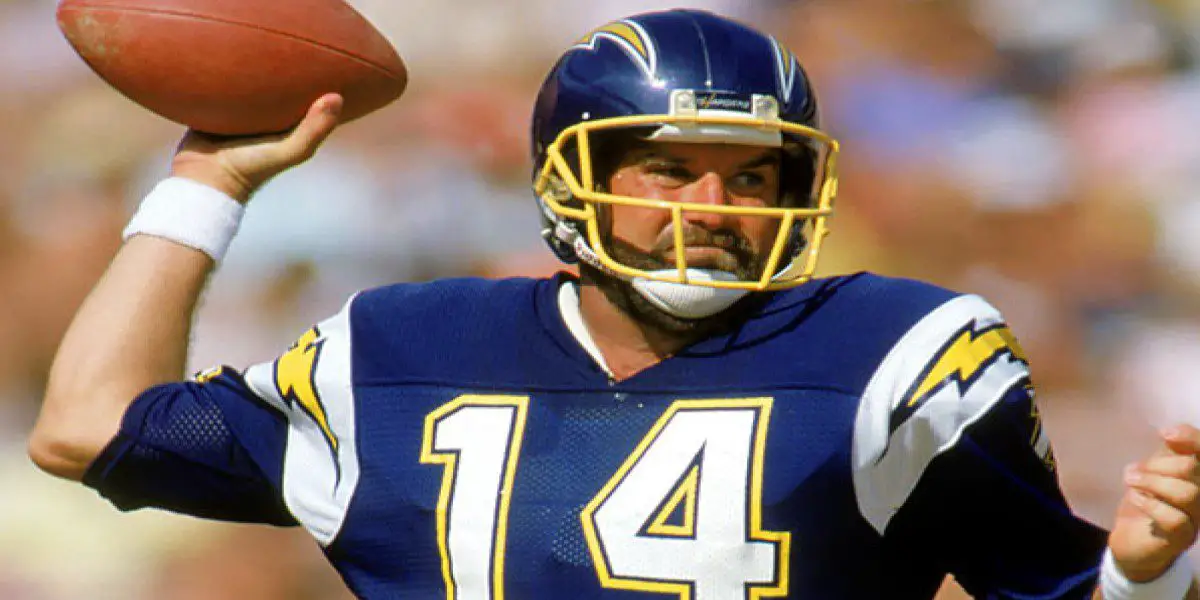
Dan Fouts became an NFL hall of famer playing for the San Diego Chargers. (Screenshot from Charger History Video)
The Receiver Now Shapes the Coverage
Modern offenses still want balance, but the passing game now bends around one wideout more often than coaches admit. Jaxon Smith-Njigba won the 2025 AP Offensive Player of the Year after posting 1,637 receiving yards and 10 touchdowns, and NFL analysis noted that he accounted for 44% of Seattle’s receiving yards while producing 1,258 yards and eight touchdowns on throws of 10 or more air yards. The useful tactical detail is where that damage came from: he shifted into the Seahawks’ starting X role after spending much of his first two seasons inside, which forced defenses to declare coverage earlier and changed how Seattle could call the rest of the route tree. When one receiver starts moving the shell, the quarterback sees the game faster.
Markets React to Structure, Too
Betting markets do not wait for the final score; they react to information that changes the shape of the game before kickoff and again after every serious adjustment. A left tackle injury, a weather downgrade, a corner ruled out on Saturday, or a coordinator showing pressure from nickel personnel can all shift the number without changing the public storyline at all. In that environment, sports bookmaker KE belongs in the same analytical workflow as injury reports, pressure rates, and red-zone tape, because the line is often another clue about whether the sharp read on the matchup has already reached the market. Used well, that does not replace film study. It tests it.
The Tape Keeps One Last Secret
The best breakdowns leave room for what the game still hides. Kenneth Walker III was the Super Bowl LX MVP after rushing for 135 yards on 27 carries, and the useful detail was not only the total but the sequence: on Seattle’s fourth drive he ripped off gains of 29 and 30 yards, and by halftime he had 100 of the Seahawks’ 183 yards as the defense kept handing the offense short, calm possessions. That is the game. Coaches script for structure, players respond to leverage, and the ball still finds one weak edge before everyone else sees it.
OregonReigns
Lakeside, Oregon
Top Photo by Scott Kelley
Share your thoughts about this team in the only free, “polite and respectful” Oregon Sports message board, the Our Beloved Ducks forum!
Related Articles:
OregonReigns is an occasional contributor to FishDuck and loves his Ducks!